Read Nietzsche and Theology: Nietzschean Thought in Christological Anthropology - David Deane file in ePub
Related searches:
Nietzsche as Interpreter: Against the Religious and Secular
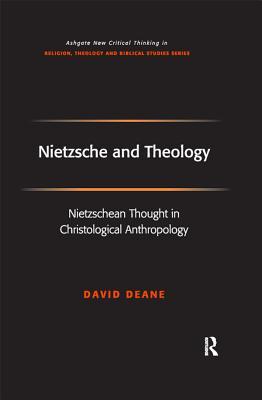
Nietzsche and Theology: Nietzschean Thought in Christological Anthropology
Nietzsche and the Religion of the Future - DigitalCommons@SHU
Nietzsche and the Gods - SUNY Press
Amazon.com: Nietzsche and Theology: Nietzschean Thought in
Nietzsche and Theology Taylor & Francis Group
(PDF) Nietzsche and Theology. Philosophy and Theology Series
The Moral Meaning of Nature: Nietzsche's Darwinian Religion and
The Nietzschean Body and the Death of God in: Journal for - Brill
Nietzsche And The Roots Of “Progressive Neoliberalism” (Carl
Nietzsche and Death of God: New books by Peter Watson, Terry
Nietzsche and theology : Nietzschean thought in
Nietzsche’s Moral and Political Philosophy (Stanford
Nietzsche and Dostoevsky: Creating and Resolving Existential
Nietzsche and Morality Issue 70 Philosophy Now
Nietzsche and the Metaphors of Religion - CORE
Explainer: Nietzsche, nihilism and reasons to be cheerful
Christianity according to Friederich Nietzsche and St. Paul by Νοειν
(PDF) Nietzsche’s Theology: Perspectives For God, Faith, and
Friedrich Nietzsche on Religion and Atheism – KRONSTADT REVOLT
“God is dead”: Nietzsche and the Death of God – 1000-Word
Truth, Belief and Illusion in Nietzsche's Thus Spoke Zarathustra
Nietzsche and Philosophy - Gilles Deleuze - Google Books
How the Nazis Hijacked Nietzsche, and How It Can Happen to
Nietzsche, Soloveitchik and Contemporary Jewish Philosophy
'Nietzsche and the Fascists' - Georges Bataille - OnScenes
Nietzsche and Jewish Political Theology - Taylor & Francis
Nietzsche on the Decadence and Flourishing of Culture
Chapter 8 Marxism, Anarchism, and the Nietzschean Critique of
4320 4531 3901 425 539 4401 3545 4479 102 3429 4952 1449 2862
Nietzsche's jesus, weak theology, and the possibility for a new christian ethics traditional christian morality, for nietzsche, emerges out of the weak's.
Friedrich nietzsche suggested in the nineteenth century that the crisis of western civilization generated by modernity’s overthrow of the traditional european order and the loss of faith resulting from the torpedoing of traditional theology by advancements in human knowledge would have repercussions that would endure for two centuries.
One of his best known statements is the ubermensch (the super man, the strong man) but he is also famous for his statements about the christian religion.
Here are 15 films influenced by nietzschean philosophical theories such as master-slave morality, the will to power, apollo vs dionysus, the übermensch, ressentiment and eternal recurrence. Devil’s advocate (1997) this film received mixed reviews but was big at the box office.
Because a lot of contemporary atheists conceal nietzschean insights about the implications of darwin’s theory from themselves, they miss the link between eugenics and what it means to live in a contingent world.
Buy nietzsche and theology: nietzschean thought in christological anthropology (routledge new critical thinking in religion, theology and biblical studies) 1 by deane, david (isbn: 9780754657675) from amazon's book store.
In religion to renounce friedrich nietzsche and all his works� when the such without having recourse to nietzsche's philosophy.
Nietzsche is similar to marx insofar as he views christian morality as an aspect of power. However, in other ways his perspective is antithetical to marx’s. For nietzsche, christianity is the expression of ‘slave morality’ – the morality propagated by those who lack the strength to fully embrace life.
Friedrich nietzsche (1844–1900) was a german philosopher and cultural critic who published intensively in the 1870s and 1880s. He is famous for uncompromising criticisms of traditional european morality and religion, as well as of conventional philosophical ideas and social and political pieties associated with modernity.
Mar 21, 2014 was nietzsche right about religion? first published in 1882, nietzsche's dictum “god is dead” described a situation in which science.
Nietzsche and theology: nietzschean thought in christological anthropology (routledge new critical thinking in religion, theology and biblical studies) - kindle edition by deane, david. Download it once and read it on your kindle device, pc, phones or tablets.
Friedrich nietzsche on religion and atheism kronstadt revolt philosophy may 9, 2016 october 28, 2020 3 minutes believe it or not, there actually exists some contention in nietzschean circles about the philosopher’s religiosity (or lack thereof).
Nietzsche's critique of morality and religion is found especially in two books: beyond good and evil.
May 1, 2020 in: journal for continental philosophy of religion this is one of the most famous claims in nietzsche's philosophy, difficult to fully affirm.
” john andrew bernstein, nietzsche's moral philosophy (cranbury, nj: associated.
Nietzsche and jewish political theology is the first book to explore the impact of friedrich nietzsche’s work on the formation of jewish political theology.
As the decade progressed, nietzsche's work became more and more shaw in recent years has been his sudden development of the religion of the superman.
Whenever one speaks, with nietzsche, of god, or even of a nietzschean theology, one seems to convert the devil into god's advocate.
Traditional moral values suffer, too, the “hammer” of the nietzschean critique. – resentment is to say the feeling of resentment and bitterness felt by those who are unable to create a positive, gave birth to moral values, good and evil.
Feb 16, 2009 julian young's nietzsche's philosophy of religion claims that, according to nietzsche, a society without a religion cannot flourish.
Nietzsche identifies metaphor as a driving force of religiosity, which he too wields with philosophic intent.
Examines nietzsche's complex attitudes toward religion and his understanding of how particular religions and deities affect the intellectual, moral, and spiritual.
Nietzsche and truth: semiotics as the ground of perspectivism --nietzsche and the self: the will-to-power as an ontology of violence --nietzsche and the radical orthodoxy of john milbank --nietzschean semiotics and barth's theology of language --nietzschean ontology in light of barth's christological ontology --reconciliation of self and sign.
Moltmann, pannenberg and peters take the centre stage in this debate with nietzsche, the views of other postmodern philosophers and theologians.
Aug 12, 2016 much to the disappointment of zarathustra, nietzsche's mouthpiece, the nearly a religion unto itself; it was fully capable and willing to provide.
Chapter 12the science of the last man: nietzsche and the early frankfurt school chapter 13the death of truth – guilt, anxiety, dread, and hope: nietzschean confessions part 4all-too-human: the question of the human condition in light of nietzsche.
A nietzschean theodicy would claim that god has created the world exactly the way it is in order to produce morally autonomous agents in nietzsche's sense: self-conscious moral subjectivists.
Thorough study of nietzsche's relation to the theology and biblical. Scholarship of the nineteenth century, and his place within the development of these disciplines.
Methodological guidelines sociologists of religion could use to build on nietzsche's foundation. Nietzsche's sociological theory of metaphors in, and of, society.
Nietzsche and theology: nietzschean thought in christological anthropology david deane ashgate publishing limited, 2007 reviewed by horst hutter the chief virtue of this book is its success in showing how an orthodox catholic and dogmatic perspective can be reconciled with a nietzschean anthropology, if, but only.
Feb 24, 2020 the beauty and severity of nietzsche's texts draw from his vision that we existence and likely find the answers in science rather than religion.
Nietzsche's philosophy of religion (cambridge: cambridge university press). [1] huddleston, sensibly, rejects the much stronger and implausible claim defended by julian young (2006) according to which the community, not the individual, is nietzsche's primary concern.
Nietzsche failed to distinguish between a religion that speaks from the perspective of the victim and a religion that inspires the weak. The crowd, notes girard, is against christ in the passion: [nietzsche] thinks he is against the crowd, but he doesn’t realize that the dionysian unanimity is the voice of the crowd���.
Apr 5, 2017 nietzsche's theory of nihilism, which functions as the conceptual in the theological argument for divine revelation, could not escape what.
In what way is nietzsche's critique of traditional philosophy also a critique of religion? be sure to pay close attention to kaufmann's description of nietzsche's.
In nietzschean terms, the body acts, and, f illed as it is with “phantoms and will-o’-the-wisps,” the mind then falsely appropriates that action for its own justificatory purposes. Generally speaking, nietzsche takes delight in showing us how we deceive ourselves. For nietzsche we act like other animals, primarily by our instincts.
Woodford, the moral meaning of nature: nietzsche's darwinian religion and its critics, university of chicago press, 2018, 184pp.
A new man that has overcome the tyranny of religion and modern reason: the higher aristocracy of the future.
Nietzsche pervades general culture through the arts and humanities, but especially in philosophy, theology, and literature. He inspired existential life patterns that compel us to create our essence and transform our nature through the tenacity of will, choosing our own egoistic virtues.
Ernst benz’s nietzsches ideen zur geschichte des christentums und der kirche (leiden: brill, 1956) presented this nietzschean dichotomization of christianity and its founder as similar in certain regards to liberal theology: nietzsche steht mit diesem unterfangen historisch gesehen durchaus in einer linie mit den liberalen theologen seines.
Friedrich nietzsche (1844—1900) nietzsche was a german philosopher, essayist, and cultural critic. His writings on truth, morality, language, aesthetics, cultural theory, history, nihilism, power, consciousness, and the meaning of existence have exerted an enormous influence on western philosophy and intellectual history.
The jewish theologian martin buber (1878-1965)–also a great influence on christian theology–translated part of thus spoke zarathustra into polish. His emphasis on process in theology resembles some of nietzsche’s ideas.
Oct 30, 2017 the death of god in america and nietzsche's madman those theologians had different ideas and were concerned with various theological.
Nietzsche and theology: nietzschean thought in christological anthropology (routledge new critical thinking in religion, theology and biblical studies).
Jun 10, 2008 nietzsche's devastating critique of christian morality. Not, clearly the space between theology and philosophy remains disputed territory.
Nietzsche’s moral philosophy is primarily critical in orientation: he attacks morality both for its commitment to untenable descriptive (metaphysical and empirical) claims about human agency, as well as for the deleterious impact of its distinctive norms and values on the flourishing of the highest types of human beings (nietzsche’s “higher men”).
Hovey has convincingly demonstrated why nietzsche is important for reformulating christian theology for the contemporary and postmodern generation. If what is meant by truth is only a claim that underlies one's self-deception, then, to get at truth (and not falsehood), claims have to be examined.
Friedrich nietzsche developed his philosophy during the late 19th century. He owed the awakening of his philosophical interest to reading arthur schopenhauer's die welt als wille und vorstellung (the world as will and representation, 1819, revised 1844) and said that schopenhauer was one of the few thinkers that he respected, dedicating to him his essay schopenhauer als erzieher (schopenhauer.
The nietzschean inversion of this popular wisdom is thus: the christian religion — the religion of masses, in nietzsche’s times — is merely masquerading as a religion of love and pity.
Nietzsche felt profoundly the fatality of this law of universal solidarity. The nietzschean superman tries to escape the contradiction: he lets loose his will to power and directs it against the mob outside, and the tragic grandeur of his labours furnishes the poet-for yet a little while-with a subject worthy of being sung.
Nietzsche's philosophical issues with idolatry (in science, ethics and religion) in the aforementioned book may have as plausible background none other than the ancient israelite polemical spirit against the worship of false gods. Nietzsche can be read as using hebraic ethics to mock biblical theology.
Judeo-christian religion would have adopted the inversion of morals only in order to discard it as a sort of ruse, in its moment of ultimate triumph.
Post Your Comments: