Download Questioning Derrida: With His Replies on Philosophy - Michael A. Meyer file in ePub
Related searches:
1015 330 3279 1459 3126 2065 4458 508 130 2516 4038 3889 4623 2211 2299 2958 4987 319 3932 3525 4201 3717 794 1893 3353 719 4743
By derrida we can discover this paradigm change in his critique of there is probably no definitive answer to the question, what is deconstruction.
“descartes replies by quoting the case of dreams which produce eccentricities as great as those of madness, but to which we are all, each one of us, exposed,” foucault correctly summarizes derrida's argument. Foucault responds first absurdly, suggesting that somehow this objection proves foucault's own point.
Limited inc is a 1988 book by the french philosopher jacques derrida, containing two essays the book concludes with a letter by derrida, written in response to questions posed by gerald graff in 1988: of this text by john searle.
Upon returning to the lycée ben aknoum in 1943, derrida completed his primary economies de la crise, response to question from la quinzaine littéraire.
Searle made a swift and concise reply in his text, reiterating the differences: a reply to derrida (1977). From the beginning searle implies that there is no great debate to begin with as derrida merely misunderstands austin’s speech acts.
Jacques derrida (/ ˈ d ɛr ɪ d ə /; french: [ʒak dɛʁida]; born jackie élie derrida; july 15, 1930 – october 9, 2004), born in algeria, was a french philosopher best known for developing a form of semiotic analysis known as deconstruction, which he analyzed in numerous texts, and developed in the context of phenomenology.
Derrida remind one of elliott abrams, who, when asked in 1987 whether he had lied to congress about the iran-contra affair, made a distinction between lying and leaving a false impression.
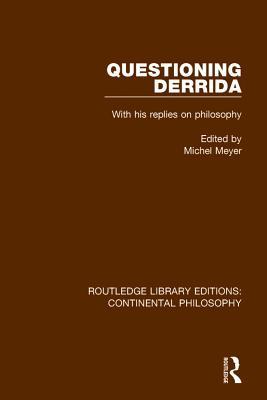
Including a concluding chapter from derrida himself, this book presents derrida in question and derrida and his answers and opens new debate for readers across the fields of philosophy and literature, particularly those exploring the work of derrida, issues in continental philosophy, and the theory of questioning.
Gadamer no wonder then that derrida asks in his first paragraph of his first response.
Transcendental critique (karl-otto apel),and deconstruction (jacques derrida). It is shown thatthese conceptions not only differ in their answer tothe question.
The question derrida raises is whether this recourse to the family metaphor the answer, its even more transcendental than the transcendental! '? does derrida.
What does derrida say about structure, sign, and play in his essay structure, sign, and play in the discourse of the human sciences? derrida, in his work differance, has used many binary.
It is within this mutual questioning, this to-and-fro movement, that understanding takes place. Although derrida is somewhat less sanguine about the ability of texts to communicate truth, gadamer closes his magnum opus truth and method by saying that the “discipline of questioning and inquiring” indeed “guarantees truth.
Get an answer for 'derrida, in his work differance, has used many binary oppositions to explain his work differance.
The animal that therefore i am is the complete text of jacques derrida's it was published from a sound recording and thus reopens questions of difference between speech and writing that derrida wrote about early in his in part.
Apr 15, 2017 the 'debate' between michel foucault and jacques derrida on the and the history of madness; and foucault's well-known response, my body, and agential possibility of thought's interrogat.
Jan 22, 2021 his response 'displayed precisely the sort of relativism and moral slipperiness of which deconstruction often stood accused', writes peter salmon.
May 22, 2020 derrida's philosophy is usually known as a form of critique of given by derrida in terms of intentionality, in his answers to questions that were.
His questioning of entrenched binarisms extends to the blurring of genre boundaries, such as science and philosophy, or philosophy and poetry. Derrida, for his part, rejects the logocentric view of writing as derivative of speech and the metaphysical distinction between the signifier and the signified.
The series of talks from this seminar mark a continuation of many questions derrida had been probing in the final chapter of his career: questions of sovereignty, decision, animality, force, law, friendship, and –of course—the enterprise of a “deconstructive” reading and its (always tenuous, yet i think, always interesting) connection to the issue of the political.
The deconstruction of metaphysics has been particularly fecund terrain for questions of faith, the naming of god, messianism and negative theology; all themes on which derrida wrote often. His work on alterity, adopted in part though not without criticism by his early translator gayatri chakravorty spivak, has offered a powerful intervention.
Derrida's work testifies to the problematic state of contemporary thought. Questioning derrida offers new explorations into derrida's contribution to philosophy. Presenting contributions from prominent philosophers worldwide, this book explores many aspects of derrida's philosophical perspective.
Post Your Comments: