Read Parenting Traumatized Children with Developmental Differences: Strategies to Help Your Child's Sensory Processing, Language Development, Executive Function and Challenging Behaviours - Sara McLean file in ePub
Related searches:
NIMH Helping Children and Adolescents Cope with Disasters
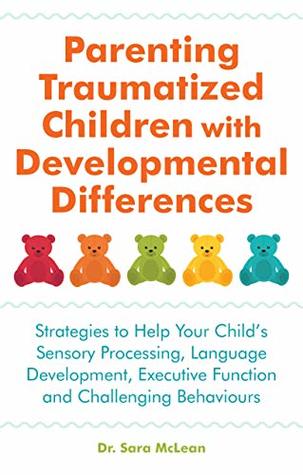
Parenting Traumatized Children with Developmental Differences: Strategies to Help Your Child's Sensory Processing, Language Development, Executive Function and Challenging Behaviours
Birth Parents with Trauma Histories and the Child Welfare System
Helping Foster and Adoptive Families Cope With Trauma
Yes, Parents, There Can Be Lighter Moments With Young Children During COVID-19
Back to school tips for parents with young children finder.com
Why children need to play with their parents
Children with Cancer: A Guide for Parents - National Cancer Institute
Sleepwalking in Children: Common Causes and Facts for Parents Parents
Buy Parenting A Child With Trauma at Amazon - Low Prices on Women's Apparel
Trauma-Informed Parenting 101: Parenting a Child with PTSD
Therapeutic Parenting Attachment and Trauma Network
Trauma Informed Parenting and Parent-Child Interaction
Resources on Trauma for Caregivers and Families - Child
Download Parenting Traumatized Children With Developmental
How Does Trauma Affect a Person's Interaction with Their Child
Parenting Children With Trauma - Search Parenting Children With Trauma
Parent-Child Separation, Trauma, PTSD And Recovery
Talking with your children after Trauma - CT.gov
Identifying, Treating, and Referring Traumatized Children: The Role
Trauma Related Resources at the Center for Child and Family
Parent's Corner: The Courage of Parenting with a History of
Trauma Sensitve Parenting Cards Attachment and Trauma Network
Buy Children With Trauma on Amazon - Children With Trauma, Low Prices
Parenting a child with a traumatic brain injury: experiences
The VOICE for Traumatized Children and families Attachment
A Parent with PTSD Can Affect the Whole Family HealthyPlace
5 Tips for Parenting a Child Struggling with Developmental Trauma
Trauma Care for Children and Adolescents - HelpGuide.org
The Adopted Child: Trauma and Its Impact - Post Institute
Principles of Clinical Work with Traumatized Children
335 3411 1274 3651 4066 1011 1415 3720 4424 1844 4572 210 2279 1301 1465 3614 1593 1021 1347 3675 3776 353 3979 3974 835 3184 892 225 46 919 260 1833 4223 4601
The national foster parent association describes foster parenting as a protective service to children and their families when families can no longer care for their children. Issues like misuse of drugs and alcohol, poverty and a parent’s.
Children continually exposed to traumatic events are more likely to develop traumatic stress reactions. The culture, race, and ethnicity of children, their families, and their communities can be a protective factor, meaning that children and families have qualities and or resources that help buffer against the harmful effects of traumatic experiences and their aftermath.
Parenting a traumatized child may require a shift from seeing a “bad kid” to seeing a kid who has had bad things happen. Trauma triggers when your child is behaving in a way that is unexpected and seems irrational or extreme, he or she may be experiencing a trauma trigger.
Becoming a parent enters you into a completely new and sometimes overwhelming world. Everything you don't want to happen will happen, and you might find yourself begging for privacy and alone time.
High structure/high nurture intentional parenting that fosters the feelings of safety and connectedness. Empowering trauma-sensitive parents, caregivers and families. Therapeutic parenting is the term used to describe the type of high structure/high nurture intentional parenting that fosters the feelings of safety and connectedness so that a traumatized child can begin to heal and attach.
Children who have encountered trauma early in life can experience real differences in their social and cognitive development. This comprehensive guide introduces what such developmental difference means, how it affects a child, and offers strategies to help support or alleviate problems that commonly arise. Mclean explains how children with developmental differences understand the world around them and offers easy to use techniques to help children with sensory and emotional regulation.
Trauma informed parenting group (tipg) utilizes a curriculum that has been developed for any caregiver (foster, kinship, guardian, or adoptive) who are caring.
Lawson guides traumatized children in using calming techniques such as diaphragmatic breathing or grounding themselves by focusing on something external such as the ticking of the clock or the texture of their clothes. “the point is to experience emotions in a safe place and cut out bad coping behaviors,” he says.
Children who have been through trauma may be physically safe and still not feel psychologically safe. By keeping your child’s trauma history in mind, you can establish an environment that is physically safe and work with your child to understand what it will take to create psychological safety.
One of the most important messages for parents about traumatic experiences—such as car accidents, medical trauma, exposure to violence, disasters—that may impact them and their children is that.
Many foster and adoptive parents are trying to raise children with complex emotional trauma, desperate for answers to heal their families.
Their observations are reinforced by the accounts of parents, teachers, and former foster children.
The state of victoria, australia’s “trauma and children—tips for parents” explains how children might react to trauma, what their needs are, and how to support them. Kids matter, a mental health initiative for young children in australia, offers a guide called “ managing tough times: suggestions for families and staff ” with helpful activities for children (and for yourself) after trauma.
Going back to school can be stressful, but not when you're prepared. Get everything you need to start the year off right with our helpful tips. Straight to your inbox finder is committed to editorial independence.
Trauma informed parenting advocating for services aftereffects of complex trauma essential elements nurturing resiliency child traumatic stress: a primer.
Parents can express some of their worries to their children, but should also stress they can handle the crisis.
Child-parent psychotherapy cpp is an intervention model for children aged 0-5 who have experienced at least one traumatic event and/or are experiencing mental health, attachment, and/or behavioral problems, including posttraumatic stress disorder.
Finally, as one mother told us: “the thing i’ve learned most from parenting traumatized children is that they are amazing, resilient, and strong. ” sources and additional information much of the information contained on this page was pulled from the following resources, which offer further details on understanding and treating trauma.
Supportive, caring adults can help a child recover from traumatic experiences. Some children may not have had adults help them before, and may not know that adults can help or that they can be trusted. Not trusting adults can be mistaken as disrespect for authority.
Findings: participants reported that, beyond the impact of the injury on the child, tbi affects the entire family. Parents need to adjust to and manage their child's difficulties and can also experience significant emotional distress, relationship discord and burden of care, further adding to the challenges of the parenting role.
Parenting with a trauma history is one of the bravest things that people can do—and it is invisible. If you had been physically disabled by a past trauma and chose to run a marathon—people would call you brave.
Apr 16, 2018 it has occurred to me frequently that i have held a front-row seat to the “trauma chronicles” since my husband and i adopted our son 11 years.
Mona delahooke, phd is a licensed clinical psychologist with more than 30 years of experience caring for children and their families. She is a senior faculty member of the profectum foundation, an organization dedicated to supporting families of neurodiverse children,.
Synopsis� parenting traumatized children with developmental differences written by sara mclean, published by jessica kingsley publishers which was released on 21 march 2019. Download parenting traumatized children with developmental differences books now! available in pdf, epub, mobi format.
Research suggests that the vast majority of parents involved in the child welfare system have experienced multiple traumatic events.
Jun 30, 2017 an even smaller number of trauma-informed therapy programs are designed specifically for children under five years old, such as child-parent.
Parenting a child who has experienced trauma takes truckloads of patience! patience toward your child: it takes patience to remain calm when your child’s behavior is out of control for the 10th time by 10 am, or when you find yourself teaching the same thing over and over with only minimal positive results,.
Alternatively, permissive parenting includes high responsiveness but little to no control. Well-intentioned caregivers may be inclined to parent traumatized children.
Physical or sexual abuse, for example, can be clearly traumatic for children. A child's relationship with their caregiver—whether their parents, grandparents,.
10 tips for disciplining traumatized children* by barbara tantrum. Kids with trauma (and the more trauma, the more true this is) are very vulnerable when they are disciplined, so you want to discipline very carefully. Try to be as gentle as you can while still holding reasonable and safe guidelines.
All children about early trauma can help you work with your child.
Parenting a child with trauma history can take its toll on the best of parent. Seek out a support system for occasional respite care, discussing of issues, and the sharing of a meal. Such small steps can go a long ways during particularly stressful times.
1) identify traumatized children, 2) educate families about toxic stress and the possible biological, behavioral, and social manifestations of early childhood trauma, and 3) empower families to respond to their child’s behavior in a manner that acknowledges past trauma but promotes the learning of new, more adaptive reactions to stress.
Parenting re-experiencing/ triggers-parenting in itself can be trigger or reminder of past trauma. -triggers can be scary for parent and for child, who may not understand. Avoidance/numbing-avoidance of negative emotions or memory is an adaptive defense mechanism but can impair relationship.
When a parent/caregiver is living with unprocessed trauma, raising a child can trigger memories of abuse and neglect that interfere with their ability to regulate their emotions.
•help parents understand their anger, fear, resentment, or avoidance as normal reactions to past trauma. All parents make mistakes! •present behavior is a means to cope with past.
For parents who themselves suffered from childhood trauma, parenting can amplify these feelings. Partly, that’s because one of the best things about having kids is being allowed to reenter the world of childhood.
The impact of a parent's ptsd symptoms on a child is sometimes called secondary traumatization. ” since violence occurs in some homes in which a parent has ptsd, the children may also develop their own ptsd symptoms related to the violence. A child's ptsd symptoms can get worse if there is not a parent who can help the child feel better.
Children are seriously harmed when they are separated from their parents. There has been quite a bit of research that proves that harm and outlines the specific.
A parent's ptsd symptoms are directly linked to their child's responses. Caregiver's ptsd symptoms impact children in many ways, and there are common problems experienced by children of veterans or other adults with ptsd.
Trauma based christian parenting will put your worries to bed and finally give you the peace your child and you deserve. The goal of trauma base christian parenting is to help people thrive – especially folks who feel like they are in survival mode.
For parents raising children with mental health needs, trauma can come from recognizing red flags, researching symptoms, and receiving an initial diagnosis. This trauma is exacerbated when a parent begins to mourn and grieve the loss of the childhood (and the child) they’d long imagined.
Childhood cancer guide for parents with information about symptoms, diagnosis, treatment, supportive care for pain and nutrition problems, advanced cancer, and survivorship.
Whether the advice begins with “in my day” or “do this or suffer the consequences,” mom and dad have a treasure trove of life lessons to share.
The most important component in helping a traumatized child to heal is a strong, therapeutic parent (primary caregiver). You can learn more about becoming a therapeutic parenting� the second most important component is trauma-sensitive, attachment-focused therapy.
Discover parenting children of trauma as it's meant to be heard, narrated by dana diangelo.
Caregivers are defined broadly to include parents, grandparents, child care providers, teachers, and others who care for children daily.
Developmental trauma – occurs when a child experiences trauma due to an attachment disruption caused by the primary caregiving system. This disruption can happen in a variety of ways; an impaired caregiver, neglect, prolonged separation, verbal or emotional abuse, or interpersonal victimization (physical or sexual assault or domestic violence).
Witnessing a parent brutalized by police is a trauma that shares similarities with children who see violence at home, but there are differences.
The system i will show you will grow your awareness and show you what works when it comes to parenting your traumatized child reason #2: a trauma based approach works with the way your child’s brain is wired. You meet them where they are instead of forcing them into parenting strategies that make them feel threatened and helpless.
What do the experts say works when parenting a child exposed to trauma? trauma can come in many forms. Physical and sexual abuse clearly cause trauma, but more and more evidence is coming in on the long-term trauma caused by neglect. And for many children, the trauma begins before birth through prenatal exposure to alcohol and drugs.
The neurobiology of attachment shows remarkable connections: ruth lanius, md, phd, describes how a parent's trauma can impact a child's developing brain.
Children who have experienced traumatic events need to feel safe and loved. All parents want to provide this kind of nurturing home for their children. However, when parents do not have an understanding of the effects of trauma, they may misinterpret their child’s behavior and end up feeling frustrated or resentful.
The trauma of emotionally toxic parenting words can damage souls.
Many children in care experience traumatic events, including abuse, neglect, and domestic violence.
Prolonged separation of young children and parents can be traumatic, potentially resulting in posttraumatic stress disorder (ptsd) and long-lasting impairments in functioning. The horror of prolonged, parent-child separation trauma, recovery, and posttraumatic stress disorder (ptsd) the inadequacies and long-term costs of institutional care.
Strategies for parenting a traumatized child, child with ptsd be available and give them your full attention when they’re needy, patiently comfort and encourage them respond calmly and quietly to unruly behavior instead of reacting with anger, irritation ( what to avoid when you listen and help.
Movement, music, art, play are all tools attachment/trauma therapists use to help our children experientially. These tools often help our children with any sensory dysfunction as well, which can often happen when children have developmental trauma.
Some factors such as a child’s age or the family’s culture or ethnicity may influence how the family copes and recovers from a traumatic event. Trauma changes families as they work to survive and adapt to their circumstances and environment.
The arrival of a new baby is one of life’s most joyful moments. If you have friends or family who have recently become new parents, chances are you’ll want to reach out to congratulate them, show your support, and offer help.
Parents can help children by being supportive, by remaining as calm as possible, and by reducing other stressors, such as: frequent moves or changes in place of residence long periods away from family and friends pressures to perform well in school.
Jul 19, 2018 parents' childhood trauma tied to behavior problems in kids (reuters health) - parents who had a lot of traumatic or stressful experiences during.
Pediatricians can optimize children's and parents' responses and recovery child-parent psychotherapy is based on healing the effect of trauma in very young.
Vivid case examples — including one that runs throughout the book — illustrate the importance of responsive parenting for helping children develop secure.
•a “trauma system” is the social environmentof a traumatized child and the system of formal and informal supports that help a child experiencing traumatic stress regulate his or her emotional state. •must reflect an understanding of the child’s developmental stage and how traumatic stress manifests differently at various.
Post Your Comments: