Download A Risk Management Approach to Business Continuity: Aligning Business Continuity and Corporate Governance - David Kaye | ePub
Related searches:
Risk Management - Overview, Importance and Processes
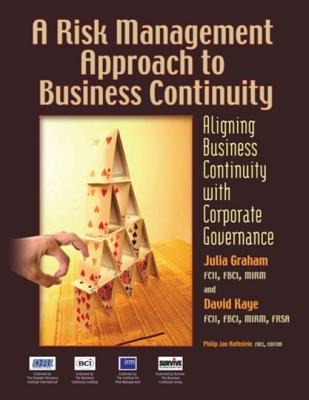
A Risk Management Approach to Business Continuity: Aligning Business Continuity and Corporate Governance
Risk Management Approach and Plan The MITRE Corporation
Management of Risk - Principles and Concepts
Risk Analysis and Risk Management - Decision Making from
Sample Risk Management Policy and Procedure
(PDF) Business Process Risk Management, Compliance and
1083 1879 1456 4712 1405 3144 96 4878 4170 1872 4289 455 1037 3136 3908 306 4032 3794 802 1756 2083 3939 1092 4598 2358 1490 3419 4957 3197
Traditional risk management approaches tend to consist of a yes-or-no decision at certain points in time or the periodic review of a stable business process. An it change or new product, for example, is subject to pre-release approval, and concerns that are identified at this point are translated into additional risk controls.
The nacd further suggests following 8 key practices for organizational risk management: clarify the roles of the board, committees, and management.
Risk management refers to the process of identifying, evaluating and shown below is a general approach used by small businesses to identify business risks.
Enterprise risk management, often shortened to erm, is a type of process management strategy that seeks to identify, understand, and prepare for the kinds of dangers, hazards, and other potential deviations from standard operating procedures that could be perceived as risks.
Furthermore, by taking a more collaborative approach to risk management, health care organizations can use a policy system allowing them to conduct business to meet compliance standards.
Risk analysis is a process that helps you identify and manage potential problems that could undermine key business initiatives or projects.
Risk management approach to business continuity: aligning business continuity with corporate governance.
This article presents a risk-based management approach to third-party data security risk and compliance through the development of a third-party risk register. It provides a systematic approach to evaluate and quantify the severity of and the exposure to risks presented by working with third-party vendors.
Enterprise risk management is a strategic, top-down and holistic approach to risk management which incorporates market, credit, operational and reputational risk. Enterprise risk management can help you to define and align your risk appetite with strategy, and with the way you operate your business.
Dec 30, 2019 the cost of risk management-- both in price and in reputational terms-- is increasing for businesses everywhere.
A project is an undertaking by one or more people to develop and create a service, product or goal. Project management is the process of overseeing, organizing and guiding an entire project from start to finish.
Risk management for a small business participant guide money smart for a small business curriculum page 6 of 23 risk management risk management applies to many aspects of a business. Your business is subject to internal risks (weaknesses) and external risks (threats). Generally, you can control internal risks once you identify them.
2 days ago posted in business, emerging risk, financial risk management, into every company's dna through his approach to design thinking.
• management by risk is a global process, and a driver for business process innovation. Its deployment needs to be supported by a knowledge base coupled to a decision support system.
For lower risk projects� a more informal approach to risk management may be appropriate. Agile risk management process the overall process for doing risk analysis in an agile environment is generally the same as a traditional, plan-driven project; however, it may not be as formal and it may not be as disciplined.
The risk management procedure is a set of five steps that are recommended by prince2. The first 4 steps are sequential, while communicate will always be done to let stakeholders know what is going on and to get continual feedback during this process. Risk management steps: identify: first complete the risk management approach document for the project, and then identify the risks (threats and opportunities) that could affect the project.
Risk management involves identifying, analyzing, and taking steps to reduce or eliminate the exposures to loss faced by an organization or individual. The practice of risk management utilizes many tools and techniques, including insurance, to manage a wide variety of risks.
You identify the highest compliance risks to your organization; and make them the priority for controls, policies, and procedures. Once your compliance program reduces those highest risks to acceptable levels, you move on to lower risks.
Financial institutions management: a risk management approach, 10th edition by anthony saunders and marcia cornett and otgo erhemjamts.
Jim deloach jim deloach has over 35 years of experience and is a member of protiviti’s solutions leadership team. With a focus on helping organizations respond to government mandates, shareholder demands and a changing business environment in a cost-effective and sustainable manner, jim assists companies in integrating risk and risk management with strategy setting and performance management.
Feb 15, 2019 pressure to deliver on business objectives quickly can lead to cutting corners at best, and significant violations and losses at worst.
Approach details a comprehensive approach to measure enterprise risk management maturity by measuring its ability to identify risk, measure impact and define mitigation strategy. The model is further enhanced by provisioning for feedback to measure the effectiveness of mitigation and to ensure that outcomes are within desired limits.
What differentiates proactive risk management approach from a reactive approach is the way risks are assessed, reported and mitigated. It involves carefully analyzing a situation or assessing processes to determine the potential risks, identifying drivers of risks to understand the root cause, assessing probability and impact to prioritize.
The operational risk management function is responsible for developing strategies to identify, assess, monitor and control/mitigate operational risk; for codifying firm-level policies and procedures concerning operational risk management and controls; for the design and implementation of the firm’s operational risk assessment methodology; and for the design and implementation of a risk-reporting system for operational risk.
Additional risk assessments, vulnerability management tests, business continuity exercises,.
Oct 31, 2017 indeed, a recent harvard business review article heralded the need for boards to consider ceo succession well in advance of “a succession.
Business analytics (ba) is the study of an organization’s data through iterative, statistical and operational methods. In other words, business analytics try to answer the following fundamental questions in an organization: why is this happ.
A risk management approach to business continuity: aligning business continuity with corporate governance is a helpful start. Authors julia graham and david kaye and editor philip jan rothstein are all seasoned specialists and the text is a solid guide to the basic components of creating business continuity plans of all types.
The nist special publication 800-39 lists the three tiers at which risk management should be addressed: organizational tier.
View student reviews, rankings, reputation for the online as in business management from champlain college champlain college online offers the fully accredited associate of science in business management.
Whether you run an e-commerce business or a brick-and-mortar operation, if you stock physical products, it's crucial for you to stay on top of your inventory at all times. Often, this involves tracking which items are going out, what's stil.
Looking to increase the performance of a growing blog? read this article for some tips to get started. Overview of all products overview of free tools marketing automation software.
A risk management approach to business continuity enables the reader to grasp the key issues in an accessible manner. It uniquely integrates the concerns of risk management and corporate governance in a practical manner that develops the interest of the reader so that it can - and should - attract the attention of the management of the organisation as a whole.
The two primary principles of quality risk management are: † the evaluation of the risk to quality should be based on scientific knowledge and ultimately be linked to the pro-tection of the patient. † the level of effort, formality, and documentation of the quality risk management process should be commensu-.
All risk management processes follow the same basic steps, although sometimes different jargon is used to describe these steps. Together these 5 risk management process steps combine to deliver a simple and effective risk management process.
This book is an introductory text on business law targeted for use in an undergraduate or graduate business.
Ideally, risk management and compliance are addressed as strategic priorities by corporate leadership and day-to-day management. More often the reality is that these areas are delegated to a few people at the corporate center working in isolation from the rest of the business.
Risk management: tools or processes to identify, prioritize and manage risk mitigation strategies. Risk avoidance: tools or processes to execute those strategies.
The format can vary widely, depending on your company’s needs. A risk management plan for a large, complex business could easily run to hundreds of pages, while a small business might just have a small spreadsheet focusing on the main items. There are a few essential items to include in a risk management plan, however.
Our risk management approach works to reduce the overall cost of risk and a primary success driver is our disciplined execution of the fundamentals.
However the best approach is to combine the two� risk assessment starts from the top according to the business objectives; and when the risk awareness among the personnel riches mature level.
However, this traditional bottom-up approach to risk management relies too heavily on communicating upward and will likely create performance variabilities as well as new risks in other departments. Erm, however, elevates risk management to a strategic organizational level.
In 2001 treasury produced “management of risk – a strategic overview” which rapidly became known as the orange book. That publication provided a basic introduction to the concepts of risk management that proved very popular as a resource for developing and implementing risk management processes in government organisations.
Com disasters come in all shapes and sizes-from hurricanes and earthquakes to fires and utility failures-and your business' survival depends on how prepared you are for each of these.
Effective management of operational risks will increase c-suite visibility and encourage more informed risk taking. Integrating orm strategy, tools, and processes into your organizational goals will lead to improved product performance, greater brand recognition, and deliver sustainable financial results.
Feb 27, 2020 basically, any person or entity that provides goods and services to other entities.
Once a plan is established, it’s time to put it to the test with table top exercises. During this final step, key staff members and management will come together to simulate their response to various emergency situations that were identified as likely risks.
Mar 4, 2021 plan risk management - defining methodology to be applied for managing the risk. Identify the risk(s) - listing out the possible uncertain events.
The risk-based approach is driven by business requirements and will help leaders identify, assess and prioritize cybersecurity spend and strategies. This guide’s primary recommendation is to apply risk-based management to cyber-security planning.
Risk-based leadership goes beyond mere operative and generic risk analysis. It is a management tool designed to systematically secure the achievement of objectives. It includes all the organisational methods and measures applied by the responsible company management to assure the appropriate execution of business procedures.
Therefore, it’s essential for having a plan for its management. You’ll be developing one covering compliance, environmental, financial, operational and reputation risk management.
Fortunately, it is never too late to adopt a truly successful risk management approach that offers solidity and confidence to the organization in terms of incident prevention and management. Follow these simple tips and start your way towards successful risk management.
Our approach to risk management: looks to promptly resolve internally identified risks to compliance with laws and regulations to maintain the provision of quality products, protect patient safety and ensure appropriate relationships with customers supports strategies to ensure effective use of resources, enables.
Risk management in business can improve the company’s brand by letting employees, customers and other businesses know that the company is responsible and resourceful. Furthermore, risk management plans give companies a chance to gather important information that may be useful for other purposes as well.
Management may explicitly document control objectives, or use texts and other references to ensure their risk statement and control statement documentation is complete. There are two primary levels at which objectives (and also controls) are defined: entity-level and assertion level.
1st edition a sustainable approach institutional subscription secure checkout free shipping.
Julia graham and david kaye, two globally recognized risk management experts with experience in 50 countries, were among the first to recognize the interrelationship of risk management and business continuity and demonstrate how to integrate them with corporate governance enterprise-wide.
Apr 10, 2020 shows the clear business benefits of managing risk from an enterprisewide suppliers or clients; others took a more wait-and-see approach.
Comprehensive risk management process • integrates the risk management framework (rmf) into the system development lifecycle (sdlc) • provides processes (tasks) for each of the six steps in the rmf at the system level nist special publication 800-37, guide for applying the risk management framework.
The risk management framework provides a process that integrates security, privacy and risk management activities into the system development life cycle. The risk-based approach to control selection and specification considers effectiveness, efficiency, and constraints due to applicable laws, directives, executive orders, policies, standards.
As a management process, risk management is used to identify and avoid the potential cost, schedule, and performance/technical risks to a system, take a proactive and structured approach to manage negative outcomes, respond to them if they occur, and identify potential opportunities that may be hidden in the situation.
The objective of enterprise risk management is to develop a holistic, portfolio view of the most significant risks to the achievement of the entity’s most important objectives. The “e” in erm signals that erm seeks to create a top-down, enterprise view of all the significant risks that might impact the strategic objectives of the business.
The federal information security management act, provides a structured, yet flexible approach for managing risk resulting from the incorporation of information systems into the mission and business processes of an organization.
It is a personal approach to deal with risk situations and experiences of previous risk decisions. Other aspects that influence the approach to risk management are the economic situation of the company and its internal environment. The risk analysis was performed for an economic entity selling toiletries, household products, paints and varnishes.
Employees who are empowered to manage risks are more likely to act on observed risks, report identified risks and feel confident owning risks. Learn new risk management strategies that shift from prescriptive to empowered risk management.
Esrm is a security program management approach that links security activities to an enterprise's mission and business goals through risk management methods. The security leader's role in esrm is to manage risks of harm to enterprise assets in partnership with the business leaders whose assets are exposed to those risks.
1 drivers of risk management adapting risk management to organisational motives main findings, implications and overview of project risk management’s official argument is clear: it is good business. Based on theory and case studies, the following drivers for risk management have been identified:.
Aug 23, 2019 what do we mean when we talk about a risk-based approach? let's take a closer look at if there's one thing senior executives hate, it's a disruption to their business.
The new recommended practices have been well received by a wide variety of stakeholders and are designed to be used in a wide variety of small and medium-sized business settings. The recommended practices present a step-by-step approach to implementing a safety and health program, built around seven core elements that make up a successful program.
There is no risk management approach that is optimal for every company, but several best practices can be leveraged and customized for your organization.
View student reviews, rankings, reputation for the online as in business management from the community college of allegheny county the online associate of science in business management degree program from the community college of allegheny.
Risk management planning offers company’s a wide variety of benefits, from protection of resources to an opportunity to a better reputation for the company’s brand. Taking a risk management approach also improves the consistency and efficiency of operations, leads to more satisfied customers and boosts the company’s bottom line.
The risk and compliance group is comprised of two teams: the risk team and the compliance team.
Prior to strategy formulation, risk management should assess pre-strategy risks. After the definition of business strategy and strategic objectives, strategic risks must be assessed, treated, monitored and reviewed by the staff responsible for each process.
Risk management planning is the key to establishing a common understanding of the project's key parameters/metrics, the sensitivity of those parameters, management's risk tolerance, as well as establishing the practical aspects of how the process will work and how the results will be documented and reported.
No excuses: a business process approach to managing operational risk. Corporate culture has come a long way over the past several years. Risk is a word that is used more frequently and in more places in companies today than ever before; as well, the term operational risk, perhaps not heard at all ten years ago, is overwhelmingly used in companies today.
Post Your Comments: