Read Of Human Bonding: Parent-Child Relations Across the Life Course - Alice S. Rossi file in PDF
Related searches:
Parents Share The Most Illogical Breakdown Their Child Has Ever Had
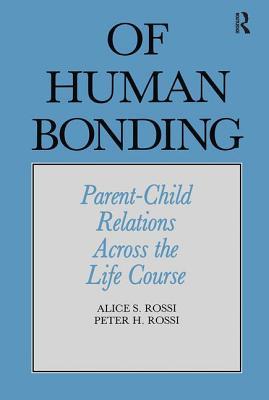
Of Human Bonding: Parent-Child Relations Across the Life Course
Of Human Bonding: Parent Child Relations Across the Life
The Stages of Attachment and Bonding - Exploring your mind
Of Human Bonding: Parent-Child Relations across the Life Course
Adult child-parent relationships: On the problem of classification
The adaptive human parental brain: implications for children's social
Of Human Bonding: Parent/Child Relations Across the Life
The Importance of Infant Bonding UC Davis Medical Center
Human bonding - Infogalactic: the planetary knowledge core
Technology is interfering with the parent-child relationship — Quartz
How humans bond: The brain chemistry revealed - News
How do children learn to form social bonds? - The Conversation
The role of length of maternity leave in supporting mother–child
POOR ATTACHMENT AND THE SOCIOEMOTIONAL EFFECTS
Empowering the Parent–Child Relationship in Homeless and
Human Bonding - The Spiritual Life
The Science Behind Baby Bonding - Parenting
The Child Archetype as Responsible for Woke Dystopia – A
A review of the relationship between dysphoria, pleasure, and
Parent-Child Relationships During the Transition to Adulthood
Hooked: The Bonding Power of Sex FamilyLife®
Parent-Child Relationships in Greek Literature: The Human Bond
The State of Human Relationships Theme in Oryx and Crake
3985 919 3186 2251 4990 4979 4711 934 1952
According to the maternal deprivation hypothesis, breaking the maternal bond with the child during the early stages of its life is likely to have serious effects on its intellectual, social and emotional development. Procedure: between 1936 and 1939 an opportunity sample of 88 children was selected from the clinic where bowlby worked. Of these, 44 were juvenile thieves and had been referred to him because of their stealing.
In human, parent-child relationships, infants perceive their parent as a “secure base,” and they explore the world more confidently when their caregiver is present. Researchers tested this by observing how dogs responded to food rewards when the owner was absent, when the owner was silent and when the owner was encouraging.
Although interest in the neurobiology of parent–infant bonding is a century old, neuroimaging of the human parental brain is recent. After summarizing current comparative research into the neurobiology of parenting, here i chart a global ‘parental caregiving’ network that integrates conserved structures supporting mammalian caregiving with later-evolving networks and implicates parenting.
Secure early bonding is the difference between the baby that grows up a secure, emotionally capable adult, and a baby that will become a depressive, anxious child, who will not cope well with life.
Object relations psychology goes so far as claiming the sexual libido is subservient to the evolutionary imperative of parent~child bonding, making the latter the strongest motivator in human affairs.
Jun 2, 2017 the concept of parent–infant bonding represents a landmark in relationship and human development psychology.
Human bonding: parents and their offspring in early modern england we are inclined to think of parent-child relations in terms of altruism: selfless love flowing from parents to their children, sacrificial giving that involves no thought of reward or consequences and is expressed in large emotional and material investment in offspring.
The child-parent relationship scale (cprs) is an instrument developed at university of virginia's curry school of education and human development that.
Rossi's 3 research works with 1,281 citations and 187 reads, including: of human bonding: parent-child relations across the life course.
Of human bonding: parent child relations across the life course.
Parent-child relationships in greek literature: the human bond. The intensity and passion of parent-child relationships in “the odyssey”, “oedipus the king” and “antigone” greet the reader with a sense of family devotion and the importance of family legacy that either grows stronger over time or dissolves quickly before the reader’s eyes.
The maternal bond (or motherly bond) is typically the relationship between a mother and her child. While it typically occurs due to pregnancy and childbirth, it may also occur between a woman and an unrelated child, such as in adoption.
The arrival of a new baby is one of life’s most joyful moments. If you have friends or family who have recently become new parents, chances are you’ll want to reach out to congratulate them, show your support, and offer help.
Should parents of a child with autism have more children? what are the pros, cons, risks, and considerations? steven gans, md, is board-certified in psychiatry and is an active supervisor, teacher, and mentor at massachusetts general hospit.
May 22, 2020 with regards to the dimensions of parental bonding, we found lateralized behind the negative impact of poor parenting practices on the child. Modulation of human behavior, especially concerning responses to social.
Over half of children said their parents checked their devices too often. There are many things that can get in the way of a parent's emotional bond with their children, including.
Of human bonding parental bonding typically occurs through a parent's being there and through the day-to-day caring for a baby-with a woman's nine months of gestation often giving her a head.
Father playing with his daughter—an activity that tends to strengthen the father– child bond.
In marriage, that is a good thing because you will stay attached to each other. Children are reproduced and you bond to those children, care for them, and help them grow up and our human race survives. But if you are 14 years old and have had 14 partners, and are still attached in some way to all 14 of them, you create problems.
The exclusive human parental–infant bond the exclusive human parental–infant bond represents a key departure from rodent models. Whereas rodent mothers promiscuously care for any infant in their sur-roundings, human bonding is person specific [37]. This exclusive bond requires representational and associative.
The importance of mother/baby bonding was first recognized in the 1950s when psychoanalyst john bowlby formulated the attachment theory, the idea that infants need to form a deep relationship with a primary caregiver in order for healthy social and emotional development to occur.
Parent and me classes combine bonding time, physical exercise, and socialization. Consider trying one of these parent-child classes with your child. Whether you are looking for a way to get out of the house, bond with your child, meet other.
Of human bonding: parent-child relations across the life course.
Learn vocabulary, terms, and more with flashcards, games, and other study tools.
Becoming a parent enters you into a completely new and sometimes overwhelming world. Everything you don't want to happen will happen, and you might find yourself begging for privacy and alone time.
High quality parent–child relations are essential to healthy development and learning in children. Homeless families experience many barriers to realizing the needed bonding and nurturance for having healthy relationships. This article explores the obstacles to the development of nurturing parent–child relations and offers strategies for addressing these issues.
The ex- clusive human parent–infant bond involves brain plastici- ty required for the fine-tuning of the parent brain to inputs from each child via a process termed.
If your kid is treating you like an outcast, we have ways to turn your relationship with your child around. If your kid is treating you like an outcast, we have ways to turn your relationship with your child around.
The most important relationship to a child is the one they develop with their parent or caregiver. Children learn about the world around them through a positive parent-child relationship. As they are growing and changing, children look to their parents to determine whether or not they are safe, secure, and loved.
Jan 16, 2018 the idea of a parent–child instant bond at birth has been highly since ses is related to the length of maternity leave (human rights watch.
Bonding is an important human instinct that gives babies a sense of security and self-esteem. Bonding also helps parents feel connected to their newest family member.
Simply stated, the mother and infant are observed in a sequence of situations: parent-child alone in a playroom; stranger entering room; parent leaving while the stranger stays and tries to comfort the baby; parent returns and comforts infant; stranger leaves; mother leaves infant all alone; stranger enters to comfort infant; parent returns and tries to comfort and engage the infant.
Oct 28, 2020 i was my son's only parent and our bond was strong. That have been echoed in a human study of the brains of victims of childhood abuse.
At this time, the baby’s maternal recognition is quite rudimentary and they still don’t show a strong attachment bond. From six weeks and up until they’re eight months old, the child begins to feel anxious if they’re separated from other human beings.
Why do parents bond with their baby? bonding is an important human instinct that gives babies.
The lines between blood and bond are clearly drawn when a foster parent files to are seen to have an equally critical role in human growth and development.
Early bonding activities include: participating together in labor and delivery feeding ( breast or bottle ); sometimes dad forms a special bond with baby when handling a middle-of-the-night feeding reading or singing to baby giving the baby a bath mirroring baby's movements mimicking baby's.
Bonding research reaffirmed the importance of the mother as the newborn's primary caregiver. Bonding during this biologically sensitive period gives the parent-infant relationship a head start. However, immediate bonding after birth is not like instant glue that cements a parent-child relationship forever.
Start the search for your birth family with these step-by-step suggestions for locating birth parents, children, and other adoptees.
Bowlby believed that the earliest bonds formed by children with their caregivers have a tremendous impact that continues throughout life. He suggested that attachment also serves to keep the infant close to the mother, thus improving the child's chances of survival.
A maternal bond is the relationship between a mother and her child. While typically associated with pregnancy and childbirth, a maternal bond may also develop in cases where the child is unrelated, such as an adoption. Both physical and emotional factors influence the mother-child bonding process. In separation anxiety disorder a child becomes fearful and nervous when away from a loved one, usually a parent or other caregiver. New mothers do not always experience instant love toward their child.
Rossi, 9780202303611, available at book depository with free delivery worldwide.
Bonding is a process of connecting that goes far deeper than words or touch, and is crucial to child development.
Simply stated, bonding is the process of forming an attachment. Just as bonding is the term used when gluing one object to another, bonding is using our emotional glue to become connected to another. Bonding, therefore, involves a set of behaviors that will help lead to an emotional connection (attachment).
Oxytocin, often called the love hormone, performs various actions in humans, such as triggering the onset of labor, reducing stress and helping group members recognize individual members.
Achetez et téléchargez ebook of human bonding: parent-child relations across the life course (social institutions and social change series) (english.
The focus on parent-child relationships is hardly surprising because the development of young children cannot be understood without considering those who nurture and socialize them.
Attachment is an integral part of the human condition, through it bonds are created between child and caregiver and these bond help contribute to a developing person’s sense of self and the world around them.
Children deprived of loving nurturing and personal human bonding during their first two years are particularly challenged to establish human attachments in later childhood and life.
Family time, also known as parent-child visits, is a key factor in promoting family bonding and setting the stage for successful reunification after a child has been.
Human bonding is the process of development of a close, interpersonal relationship. It most commonly takes place between family members or friends, [1] but can also develop among groups, such as sporting teams and whenever people spend time together.
Human bonding is the process of development of a close, interpersonal relationship between two or more people. It most commonly takes place between family members or friends, [1] but can also develop among groups, such as sporting teams and whenever people spend time together.
Nonetheless, early experiences of parent-child relationships are important, even if closeness changes with age, as they set the stage for later parentchild interactions.
The next two predictors included parental preoccupations and attachment representations of the parent-child relationship, followed by bonding to own parents, attachment anxiety, and parenting stress. As seen, pot, attachment representations, and bonding to own parents each explained unique variance in affect synchrony.
Maternal-newborn bonding is the complex process of attachment between a mother and newborn. The authors used the walker and avant methodology to conduct a concept analysis regarding maternalnewborn bonding as it relates to advanced practice nurse (apn), the patient, and health care.
Bonding is a mutual, interactive process, and is different from simple liking. Bonding typically refers to the process of attachment that develops between romantic or platonic partners, close friends, or parents and children. This bond is characterised by emotions such as affection and trust.
Jul 18, 1988 in these two case examples, which children are more likely to quality of early parent- child bonding is a crucial aspect of human development.
The term human bond-- or, more generally, human bonding-- refers to the process or formation of a close personal relationship, as between a parent and child, especially through frequent or constant association. When pairs have favorable bonds, the nature of this bonding is usually attributed to good interpersonal chemistry.
Human bonding refers to the development of a close interpersonal relationship between family members or friends. The term is from the 12th century middle english word band, which refers to something that binds, ties, or restrains.
The chapter provides an integrative framework for the evolutionary analysis of parent–child relationships.
Feb 8, 2021 boston — bonding between a mother and her newborn child may how human brain chemistry is hard at work for both babies at parents.
The forms of human bonding (parent-child, kinship, friendship) have analogies in the animal world and appear to be based on a combination of fixed action patterns, learning behaviors supported by endogenous secretion of pleasure-producing endorphines, and social reinforcement.
The bond of love differs from the attachment bond the infant’s need for survival and the parent’s need to care for their offspring create a bond of love between parent and child. However, an infant needs something more than love and caregiving in order for their brain and nervous system to develop in the best way possible.
The parent-child bond strengthens over time through everyday caregiving. There's no magic formula, but a few things can help the process along. Human touch is soothing for both you and your baby, so hold him often and stroke him gently.
Feb 13, 2017 time, that the neurotransmitter dopamine is involved in human bonding. The other's response, creating the life-affirming parent-child bond.
Attachment can be defined as a deep and enduring emotional bond between two people in which each seeks closeness and feels more secure when in the presence of the attachment figure. Attachment behavior in adults towards the child includes responding sensitively and appropriately to the child’s needs.
In humans, synchrony is heavily dependent on attachment, due to the personal nature of our synchronic bonds, first established with parents in early life.
Birth bonding is not like instant glue that cements the mother-child relationship together forever. Bonding is a series of steps in your lifelong growing together with your child. Immediate bonding simply gives the relationship between parents and attachment parenting babies a headstart.
It's a unique bond that every child and parent experience, enjoy and nurture.
Studies in mammals have implicated the neuropeptide oxytocin (ot) in processes of bond formation and stress modulation, yet the involvement of ot in human bonding throughout life remains poorly understood. We assessed ot in the plasma, saliva, and urine of 112 mothers and fathers interacting with their 4–6-month-old infants.
This effect is also found in parent-child bonding: human infants use their caregivers as a secure base when it comes to interacting with the environment.
The importance of bonding with the primary caregiver cannot be overestimated. Failure to do so profoundly affects future development and the ability to form healthy relationships as an adult. I urge parents to give themselves plenty of time with their baby and to follow their instincts.
Human bonding is the development of a close, interpersonal relationship between family members or friends. [1] bonding is a mutual, interactive process, and is not the same as simple liking. The term is from the 12th century, middle english word band or band, which refers to something that binds, ties, or restrains.
Children lack strong emotional bonds with their parents and hence are likely to have an insecure attachment style, according to a report published by sutton trust.
The concept of human bonding being an absolute “critical period” or a “now-or-never” relationship was never intended. Birth bonding is not like instant glue that cements the mother-child relationship together forever. Bonding is a series of steps in your lifelong growing together with your child.
Post Your Comments: