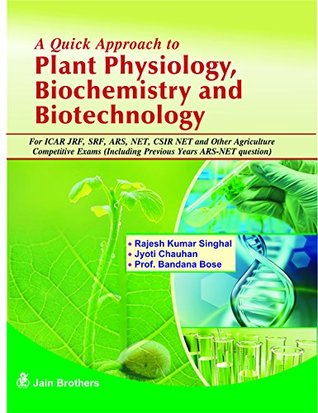
Read A Quick Approach to Plant Physiology, Biochemistry and Biotechnology - Jyoti Chauhan, Prof. Bandana Bose Rajesh Kumar Singhal | ePub
Related searches:
(PDF) A Quick Approach to Plant Physiology, Biochemistry and
A Quick Approach to Plant Physiology, Biochemistry and Biotechnology
A Quick Approach To Plant Physiology, Biochemistry And
Buy A Quick Approach to Plant Physiology, Biochemistry and
Plant Physiology and Crop Improvement - Biology Discussion
(PDF) Plants and Microclimate: A Quantitative Approach to
International Journal of Plant Physiology and - Academic Journals
Plant Physiology and Genetics Research : USDA ARS
Bio 332: Molecular Biology and Physiology of Plants - University of
Untitled - Agricultural and Biological Engineering
A Nanobiotechnology Approach to Study Plant Physiology and
Amazon.com: Plants and Microclimate: A Quantitative Approach
Plants and Microclimate a Quantitative Approach to
Journal of Soil Science and Plant Physiology - Pubtexto
Plant physiology and development / Lincoln Taiz [et al
Disease and crop physiology: a - WUR E-depot
Plants and Microclimate, A Quantitative Approach to
Computational Approaches to Design and - Plant Physiology
Plants and microclimate a quantitative approach to
(PDF) Plant and Microclimate: A Quantitative Approach to
(PDF) Plants and microclimate, a quantitative approach to
Physiological and Molecular Approaches to Improve Drought
Salinity induced physiological and biochemical changes in
Photoperiod: Subject-Matter, Response and Approach Flowering
Water Potential: Measurements, Methods and Components
234 4323 3387 1237 309 4021 4993 3693 2225 2750
The journal of plant physiology publishes several types of articles: original research articles, reviews, perspectives articles, and short communications.
The study collected data on plant, soil, and microclimatic responses to the that allow rapid measurement of multiple parameters such as plant temperature, plant crops using high throughput phenotyping and other genetic approaches.
Wisconsin fast plants™ that have received varied amounts of fertilizer pellets.
This course is designed to give students a hands-on approach to understanding the metabolic activities of how plants grow develop throughout their.
Genetic approach to photoperiod: the basic approach is to identify the mutant that influences timing at any level, then the wild type gene is isolated and its gene product is analysed for clues to its role in the timing mechanism. In fact in several plant breeding programmes, flowering genes were also sought after.
It is a quantitative approach to designed to make the more numerical aspects of the subject accessible to plant and environmental science students, and will also provide a valuable environmental plant physiology reference source to practitioners and researchers in the field.
The laboratory section is this approach should challenge choice, short answer, and short essay.
A condensed version of the best-selling plant physiology and development, this fundamentals version is intended for courses that focus on plant physiology with little or no coverage of development. Concise yet comprehensive, this is a distillation of the most important principles and empiricalfindings of plant physiology.
A quick approach to plant physiology, biochemistry and biotechnology for icar, jrf, srf, ars, net, csir, net and other agriculture competitive exams (including previous years ars-net question) reviews.
A quantitative approach to environmental plant physiology third edition this rigorous yet accessible text introduces the key physical and biochemical processes involved in plant interactions with the aerial environment. It is designed to make the more numerical aspects of the subject accessible to plant and environmental science.
A balanced introduction to traditional and modern topics in plant physiology. Packed with compelling photographs and illustrations, introduction to plant physiology offers a straightforward approach for understanding how plants work. From roots and respiration to the role of vegetation in an ecosystem, this student-friendly book explains underlying concepts within a framework of historical origins and modern experimental evidence.
Plant ecophysiology is concerned largely with two topics: mechanisms (how plants sense and respond to environmental change) and scaling or integration (how the responses to highly variable conditions—for example, gradients from full sunlight to 95% shade within tree canopies—are coordinated with one another), and how their collective effect on plant growth and gas exchange can be understood on this basis.
Plant biodiversity is definitely worth being further explored. In particular, extremophile plants such as resurrection plants or halophytes (177, 300, 312) may reveal novel physiological regulations. In ice plant, aquaporin function is dramatically changed during the salt-induced switch from c3 to cam metabolism (134, 302).
Apr 16, 2020 as part of a holistic approach, scientists at the mpi-mp are concerned with understanding the interactions of the processes that occur in plants.
Hamlyn jones provides an excellent combination of experimental experience with the mathematical and physical bases of plant physiology and environmental physics. This true systems approach to understanding plant responses to the environment is precisely what is needed as we address complex issues such as climate change.
I'm ~rooting~ for you! i'm ~rooting~ for you! community contributor take this quiz with friends in real time and compare results this post was created by a member of the buzzfeed community.
Dec 16, 2008 its focus is on the ideas and experimental approaches in plant physiology.
The following points highlight the two main approaches of photoperiodic time measurement. The conception of physiological clock of erwin bunning: this is also known as biological clock or oscillating clock. Bunning performed several experiments in kalanchoeblossfeldiana. In this species the petals open in the morning and close down in the evening.
Photosynthesis can be defined as the process via which plants absorb the energy from the sunlight, use that to convert carbon dioxide and water into molecules which accelerate the procedure of growth. These converted molecules comprise of enzymes, sugars and chlorophyll.
A multi-omics extraction method for the in-depth analysis of synchronized cultures of the green alga chlamydomonas reinhardtii.
The site visits consisted of discussions with state officials in each of six states about state budget processes and choices involving major social programs, including tanf cash and non-cash assistance, child care subsidies, child welfare,.
I want to help you achieve the grades you (and i) know you are capable of; these grades are the stepping stone to your future.
Mark aurel schöttler at the max planck institute of molecular plant physiology for the photosystem ii activity measurement. Dijun chen from the humboldt university of berlin for the help in the rna-seq analysis and the humboldt research fellowship to support this research.
T1 - plants and microclimate, a quantitative approach to environmental plant physiology. Bt - plants and microclimate, a quantitative approach to environmental plant physiology.
Healthy crop growth depends on matching the greenhouse climate as much as possible to the needs of the plants; a number of climate factors – such as light,.
Advance publication magnesium and calcium over-accumulate in the leaves of a schengen3 mutant of brassica rapa perception of solar uv radiation by plants:.
Such an approach, in combination with the metabolome of wall components, offers an opportunity to explore new aspects of cell walls, the elucidation of which might break fresh ground in the field of plant biology.
Plant nanobiotechnology is an emerging field of science that aims to utilize nanomaterials for studying plant organelles, tissues, and whole organisms and provide them with augmented functions. The giraldo lab works at the interface of plant physiology and nanotechnology to create new tools for studying how plants function and enhance plant productivity.
This book attempts to provide a soundly based introduction to those features of the atmospheric environment of particular relevance to plants; it also describes the physical and physiological principles required for understanding how these factors affect plants.
Plant physiology is now considered as an essential ingredient for improving presents a detailed collection of biotechnological approaches in plant physiology�.
The plant responds to salinity by modulating morpho-physiological, anatomical, biochemical, and molecular processes. Plant response to salinity tolerance by na + exclusion and sequestration from the cytoplasm, this promotes ion homeostasis and its compartmentalization� for salinity tolerance plant increases the accumulation of osmoprotectants (pro, gb, gaba, and pas), promote antioxidant enzyme (cat, pox, sod, and apx) and also synthesize polyamines.
Examples of physiological responses are changes in heart rate, a higher respiration rate, sweating, changes in body temperature and changes in blood pressu examples of physiological responses are changes in heart rate, a higher respiration.
Having grown up on a farm, he wanted to render basic science in plant physiology useful in production agriculture — which, even today, is not commonly done. He saw the value in evaluating and quantifying how various physiological processes result in crop growth and yield.
A quick approach to plant physiology, biochemistry and biotechnology hardcover – 1 january 2018 by prof.
978-0-521-27959-8 - plants and microclimate: a quantitative approach to environmental plant physiology: third edition.
Planting elaeagnus depends partially on the species and cultivars you choose as the climate and light requirements can vary.
Ies of detailed plant physiological processes involved in crop-pathogen interre of production ecology, a modelling approach of the explanatory type is needed.
A textbook of plant physiology plant physiology is a subdiscipline of botany concerned with the functioning, or physiology, of plants. Closely related fields include plant morphology (structure of plants), plant ecology (interactions with the environment), phytochemistry (biochemistry of plants), cell biology, genetics, biophysics and molecular.
The integration of p dynamics from soil to plant via the rhizosphere provides a comprehensive picture of available p behavior and efficient acquisition in association with plant adaptive strategies� in the past two decades, significant progress has been made in understanding soil, rhizosphere, and plant processes associated with soil p transformation, p mobilization and acquisition, and p-deficiency responses.
Apr 8, 2014 department of plant physiology, faculty of short communications: a short communication is suitable proposed approach or solution.
Moreover, the establishment of the curriculum has been designed to increase significantly communication among the plant physiology faculty and to insure that the university will provide students a complete educational program including molecular biology, plant biochemistry, and whole plant physiology.
Plant physiology-international journal devoted to physiology, biochemistry, of approaches, concepts, techniques, and analytical methods to build a plant cell.
Plant synthetic biology aims at applying engineering principles to the design and alteration of plant systems as well as to the de novo construction of artificial biological pathways whose behavior in plants can be predicted, controlled, and, ultimately, programmed (schwille, 2011; liu and stewart, 2015; glass and alon, 2018). Since plant yield and nutritional value directly depend on metabolically assembled building blocks, in silico design, testing, and experimental validation of synthetic.
We used computer-assisted personalized approach (capa), a networked teaching and learning tool that generates computer individualized homework problem sets, in our large-enrollment introductory plant physiology course. We saw significant improvement in student examination performance with regular homework assignments, with capa being an effective and efficient substitute for hand-graded.
Plants are defenseless against the munching mouths of herbivorous animals, but some carnivorous plant species take matters into their own stems by snacking on bugs.
Plants and microclimate: a quantitative approach to environmental plant physiology.
Membrane trafficking, including that of integral membrane proteins as well as peripherally associated proteins, appears to be a vital process common to all eukaryotes. An important element of membrane trafficking is to determine the protein composition of the various endomembrane compartments.
A quick approach to plant physiology, biochemistry and biotechnology for icar, jrf, srf, ars, net, csir, net and other agriculture competitive exams (including previous years ars-net question) by prof. Bandana bose, jyoti chauhan, rajesh kumar singhal from flipkart.
Advertisements: in this article we will discuss about the contribution of plant physiology towards crop improvement. Food is an essential requirement, and the demand for food shall keep on increasing with the increase in population. Till recently the increase in the rate of production of food matched or even exceeded the population growth rate.
Hydroxyproline-rich glycoproteins (hrgps) are a superfamily of plant cell wall proteins that function in diverse aspects of plant growth and development. This superfamily consists of three members: hyperglycosylated arabinogalactan proteins (agps), moderately glycosylated extensins (exts), and lightly glycosylated proline-rich proteins (prps).
From the given equation it may be inferred that water potential in a plant cell is equal to the sum of the matric potential (ψ m) which is due to the binding of water molecules to protoplasmic and cell wall contents, the solute potential (ψ s; ψ π) due to the dissolved solutes in the vacuoles and lastly the pressure potential (ψ p) which is due to the pressure developed within cells and tissues.
Plant respiration is mostly a chemical reaction with the help of which plants respire, in other words, stay live. The equation for the same would be glucose + oxygen ----- carbon dioxide+ water + energy. Respiration can be categorised as – respiration in roots; respiration in stem; respiration in leaves; types of respiration-.
Post Your Comments: